Quick answer
Yes — a modern FDM printer running PLA is an apartment-compatible hobby: it plugs into a normal outlet, needs no alterations, and the quiet machines hold conversation volume. The three things that actually decide whether it works in your apartment are noise through shared walls, ventilation habits, and whether you were considering resin — which we don’t recommend in a small rental.
Our verdict
- Quietest apartment printer
- Bambu Lab A1 mini — ~$200–300 (check current)Check price on Amazon
- Bigger builds, same quiet
- Bambu Lab A1 — ~$220–300 (check current)Check price on Amazon
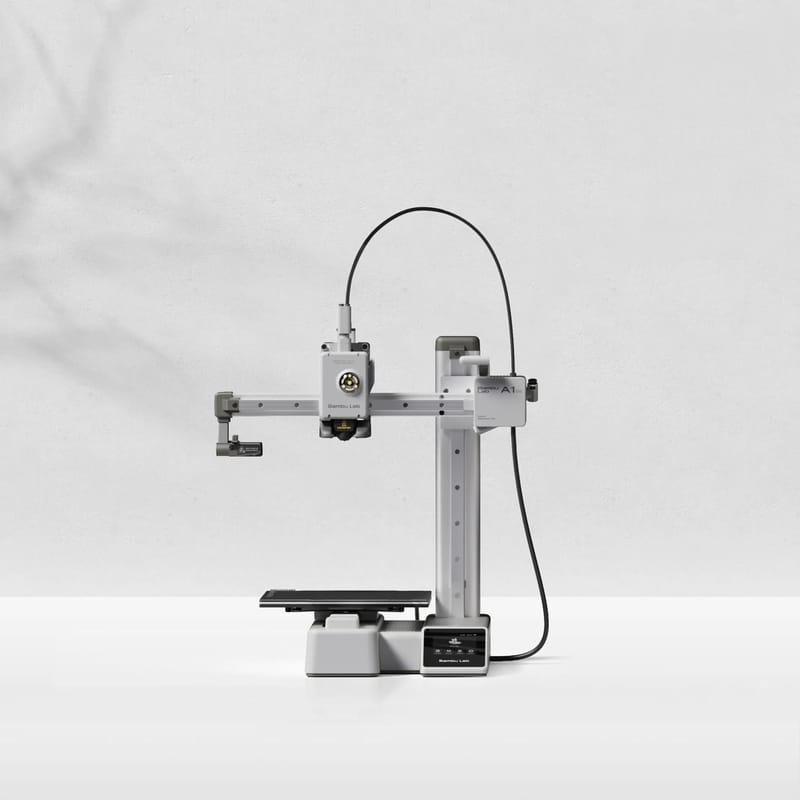
Bambu Lab A1 mini
Quiet, beginner-proof 3D printer sized for apartment desks.
- 180 × 180 × 180 mm build volume
- Full-auto calibration, ≤48 dB quiet mode
- Open frame; best with PLA and PETG
~$200–300 (check current)
Noise: the shared-wall math
Printer noise has two parts. The machine itself — Bambu’s A1 series specs at or under 48 dB in quiet mode, about the level of a normal conversation — and the surface it stands on, which can matter more. A printer on a hollow desk against a shared wall turns the wall into a speaker; the same printer on a solid table with a foam or rubber mat under it, pulled away from the wall, mostly disappears. Overnight prints are where neighbors get involved: quiet mode plus a soft mat usually passes the bedroom test, but run one print overnight yourself and listen from the pillow before you make it a habit.
3D printing setups by apartment situation
| Situation | Works? | Setup that makes it work | Skip |
|---|---|---|---|
| Studio apartment | Yes | Quiet-mode FDM on a solid table with a mat; print while awake or out | Overnight prints in the same room you sleep in |
| 1BR+, printer in a separate room | Yes, easily | Door closed, window cracked during prints | Nothing — this is the ideal renter setup |
| Shared wall directly behind the desk | Yes, with care | Move the printer to an interior wall; damping mat | Hard-mounting anything to the shared wall |
| Resin printing | Not recommended | Needs dedicated ventilation, gloves, and flammable-solvent handling | Resin in any room you live or sleep in |
| Balcony or storage unit | No | — | Temperature swings ruin prints; leases and fire rules usually prohibit it anyway |
Resin is a different hobby
FDM melts plastic filament; resin printers cure liquid photopolymer, and that difference is the whole problem in a small space. Uncured resin is a skin and respiratory irritant, cleanup uses isopropyl alcohol in quantities that are genuinely flammable, and the workflow assumes ventilation a rental bedroom doesn’t have. None of this is exotic — it’s on every resin manufacturer’s own safety page — but it adds up to a workshop hobby, not an apartment hobby. If the miniature detail of resin is why you’re here, our honest advice is a modern 0.2 mm-nozzle FDM setup first, and resin only when you have a garage or dedicated ventilated space. Our ventilation guide covers the air-quality side for FDM.
What the lease actually cares about
A 3D printer is an appliance, legally closer to a sewing machine than to anything a lease prohibits — no permission needed to own or run one. Where renters get in trouble is everything around it: drilling vents through window frames (an alteration), storing flammable solvents (renter’s-insurance and fire-code territory), tripping breakers with space-heater-plus-printer outlets, and noise complaints during quiet hours. Keep the printer self-contained and the lease has nothing to say.
Apartment 3D printing ground rules
- Solid table, damping mat, interior wall — noise is placement first.
- Crack a window during prints; PLA is the low-odor, low-fuss filament.
- No overnight unattended prints until the machine has earned your trust.
- Keep the printer visible from your desk or camera, not in a closet.
- Skip resin until you have a dedicated, ventilated non-living space.
- Check your renter’s insurance covers your gear — printers walk off in moves.
Sources checked
FAQ
Can I run a 3D printer at night in an apartment?
Quiet-mode machines at ~48 dB with a damping mat usually pass through walls fine, but test it yourself: start a print, listen from your bed and near the shared wall. Unattended overnight printing is a separate question — build trust in the machine first.
Do I need my landlord’s permission for a 3D printer?
No — it’s a plug-in appliance requiring no alterations. Permission questions only appear if you modify the unit for ventilation, which you shouldn’t; a cracked window does the job for PLA.
Is a resin printer okay in an apartment?
We recommend against it. Resin work needs real ventilation, skin protection, and flammable-solvent handling that a small rental can’t safely provide. FDM with PLA delivers the apartment-friendly version of the hobby.
Will a 3D printer raise my electric bill?
Barely — desktop FDM printers typically draw under 100 watts once the bed is warm, less than most game consoles under load. It plugs into any standard outlet.