Quick answer
Yes — inside the unit you rent, you can generally run a security camera without asking anyone, as long as it’s a plug-in model that doesn’t drill into walls and it only covers your own private space. The lines you can’t cross: hallways and common areas, anywhere a roommate or guest reasonably expects privacy, and hidden audio recording, which state consent laws treat much more strictly than video.
Our verdict
- Renter-safe plug-in camera
- TP-Link Tapo C120 — ~$25–45 (check current)Check price on Amazon
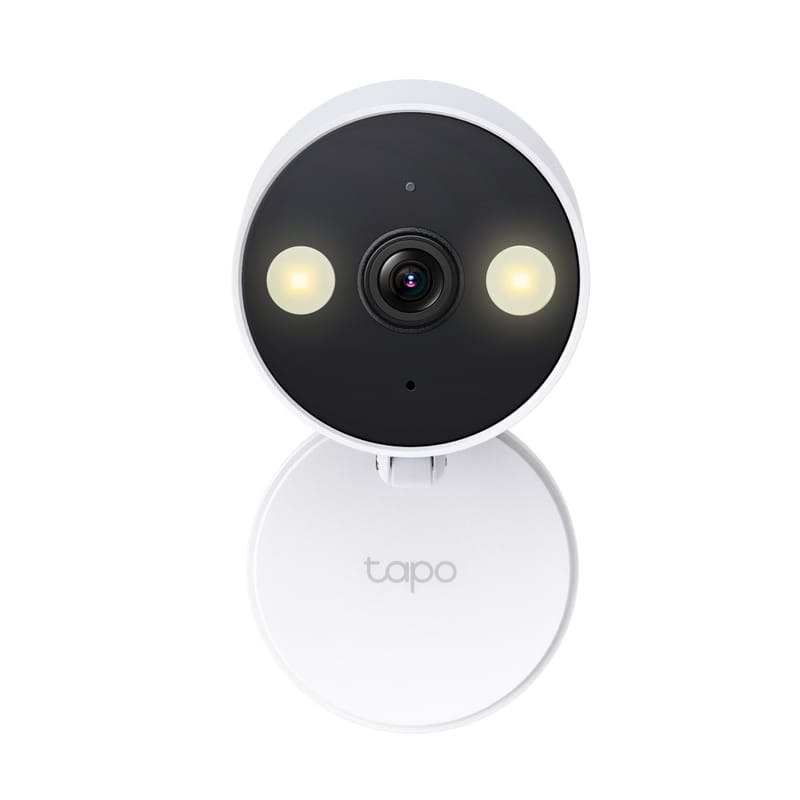
TP-Link Tapo C120
Small plug-in camera for private, lease-safe spots.
- 2K resolution, indoor/outdoor rated
- Shelf or table placement, no drilling
- Local microSD or optional cloud storage
~$25–45 (check current)
The three rules that decide it
Space: your lease gives you control of the unit’s interior, so a camera on a shelf pointed at your own door or living room is your call. The hallway outside your door, lobbies, laundry rooms, and shared yards belong to the building — cameras there are the landlord’s decision, not yours.
People: roommates, partners, and overnight guests have privacy rights inside the home too. Bedrooms and bathrooms are off-limits, period, and a camera covering shared living space works best as something everyone has agreed to, not something they discover.
Audio: video and sound are different laws. Many states require the consent of one — and some states all — parties being recorded, so turn the microphone off unless everyone who lives there has agreed. The state-by-state rules are collected in the Reporters Committee’s recording guide linked below.
Where a renter's camera can point
| Situation | Allowed? | Why | Watch out for |
|---|---|---|---|
| Inside your unit, your own space | Yes, no permission needed | You control the rented interior | Use shelf or plug-in mounting, not drilled mounts |
| Shared rooms with roommates | With their agreement | Housemates have privacy rights at home | Audio consent rules are stricter than video |
| Pointed out your window | Usually, with care | You can film what is plainly visible | Never aim into a neighbor’s window or private yard |
| Your door, from inside a peephole-style view | Yes | It covers your own entry | Doorbell cams that record the shared hallway may need landlord OK |
| Hallways, lobby, laundry, parking | No | Common areas are the landlord’s to monitor | Ask the landlord for building cameras instead |
Set it up so it never becomes a problem
Renter camera checklist
- Pick a plug-in camera that sits on a shelf — no drilling, no mounting damage.
- Point it at your own space only: entry, living room, valuables.
- Turn audio recording off unless every resident has agreed.
- Tell roommates where every camera is; no hidden cameras in a shared home.
- If you want a doorbell camera on a shared hallway, ask the landlord first.
- Check the camera’s storage setting — local microSD keeps footage in your hands.
Our camera privacy checklist covers the flip side — locking down the cameras you own so they don’t become someone else’s window into your home.
Sources checked
FAQ
Can my landlord stop me from having a camera inside my unit?
Leases rarely address interior cameras, and a plug-in camera makes no alterations, so there’s usually nothing to prohibit. If your lease has unusual language about surveillance equipment, ask before assuming.
Can I put a camera in the hallway outside my apartment?
No — hallways are common areas under the building’s control. A doorbell-style camera that happens to see the hallway sits in a gray zone: get the landlord’s OK in writing.
Can my landlord put cameras inside my apartment?
Inside your unit, no — that’s your private space. Landlords can run cameras in common areas like entrances and parking.
Do I have to tell guests they’re on camera?
For video in your own living space, generally no, but audio is stricter — consent requirements apply in many states, so keep microphones off or get agreement.