Quick verdict
If the lease rules out a window unit, buy a dual-hose inverter portable — that combination is what separates the portables people love from the ones that go back to the store. The Midea Duo is the pick for a typical bedroom: quiet enough to sleep next to and free of the single-hose design flaw that makes cheap portables struggle. For a large bedroom or studio up to ~600 sq ft, the Whynter ARC-1230WN is the same design with more capacity and a 3-year compressor warranty. And one honest thing first: even a good portable cools less per dollar than the window unit you’re not allowed to install — this guide exists precisely because you can’t install one.
Our verdict
- Best overall for a bedroom
- Midea Duo MAP12S1TBL — ~$400–550 (check current)Check price on Amazon
- Bigger rooms, longer warranty
- Whynter NEX ARC-1230WN — ~$540–600 (check current)Check price on Amazon
The picks
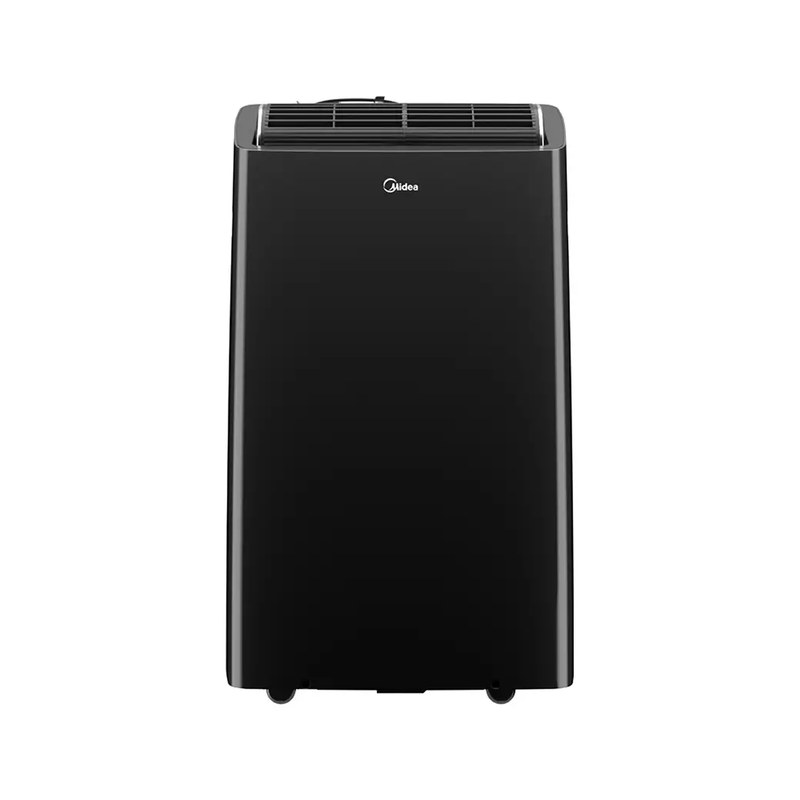
Midea Duo MAP12S1TBL
The quiet inverter portable AC owners can actually sleep next to.
- 10,000 BTU SACC (12,000 ASHRAE), up to 450 sq ft
- Hose-in-hose dual design — no single-hose negative pressure
- Inverter compressor, manufacturer-rated as low as 42 dBA
- Pressure-fit window kit, no screws or drilling
~$400–550 (check current)
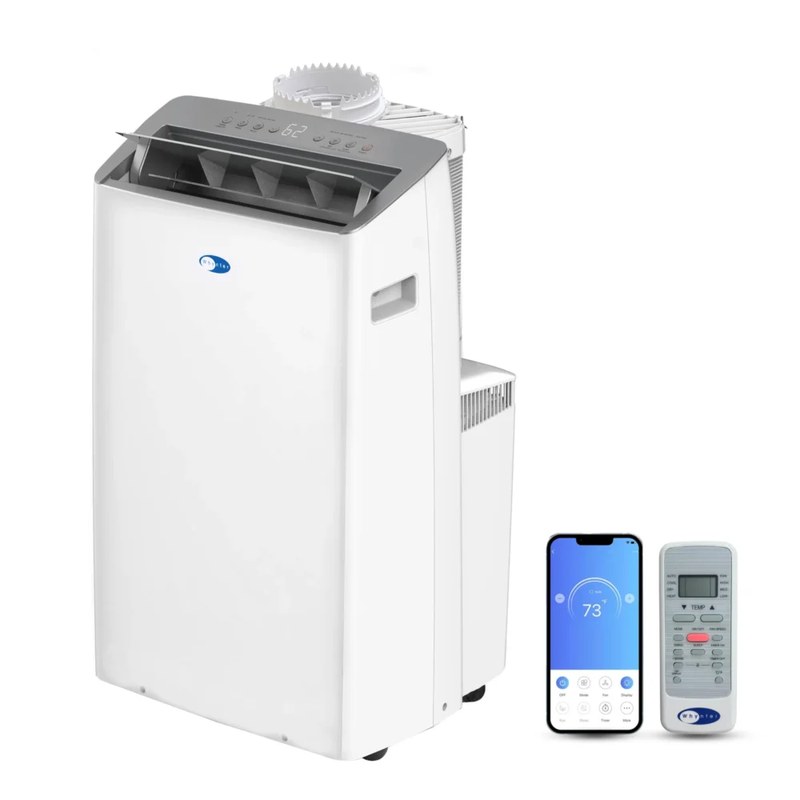
Whynter NEX ARC-1230WN
Same quiet dual-hose design, more capacity, 3-year compressor warranty.
- 12,000 BTU SACC (14,000 ASHRAE), up to 600 sq ft
- Hose-in-hose inverter, 42.5–56.5 dB by fan speed
- Wi-Fi app control; 11.9 A — wall outlet only
- Window kit fits 28–82 in sliding windows
~$540–600 (check current)
Skip the Midea Duo if your bedroom window is a casement/crank type its pressure-fit kit can’t seal (measure before buying — this is the category’s most common return reason), if you need serious dehumidification in a very humid climate, or if your budget is firmly under ~$350. Its known weak points, straight from owners: fragile plastic window-kit tabs, and a minority of failures at 1–3 years — past its 1-year warranty.
Skip the Whynter if the room is a typical 10×12 bedroom — the cheaper Duo is sufficient — or if Wi-Fi control and the longer compressor warranty aren’t worth the premium to you. It’s essentially the same platform as the Duo, so expect the same window-kit and humidity caveats, and at 77 lb it’s the heaviest thing here.
The number on the box is not the cooling you get
Every portable AC in the US carries two ratings: the marketing-friendly ASHRAE BTU number on the box, and the SACC (Seasonally Adjusted Cooling Capacity) figure from the Department of Energy’s test procedure, which measures what the unit delivers under realistic conditions. SACC typically runs 25–45% lower — worst for single-hose units. Buying on the box number is the single biggest regret in this category: the “12,000 BTU” bargain unit may deliver roughly half that in practice. Compare SACC to SACC, always.
One hose or two — the decision that matters most
A single-hose portable blows its hot exhaust outside using air from your room — which puts the room under negative pressure, so warm air gets pulled back in through every door gap and outlet. The unit runs constantly and the room never quite gets cold; in serious heat, owners describe cheap single-hose units as barely working. There’s also a conservative safety note: in apartments with gas appliances, depressurizing the room is one more reason to keep a working CO alarm and prefer a balanced design.
A dual-hose unit draws its cooling air from outside through a second hose, so your room air stays put. Both of our picks use a hose-in-hose version of this — dual-hose performance through a single window opening, with one kit to fit. This single design difference, plus an inverter compressor that idles down instead of cycling on/off at full blast, is most of what separates a portable you can sleep next to from one you can’t.
Match the unit to the room
Portable AC fit by bedroom situation
| Situation | Best next step | Why it fits | Check first |
|---|---|---|---|
| Typical bedroom, light sleeper | Midea Duo (inverter, ~42 dBA low) | Inverter units idle quietly; on/off compressors are the "too loud to sleep" complaint | Window type and size fit the kit |
| Large bedroom or studio | Whynter ARC-1230WN (12,000 SACC) | Rated to ~600 sq ft where the Duo tops out around 450 | A wall outlet on a circuit without other big loads (11.9 A) |
| Casement or crank windows | Measure and research the venting before any purchase | Standard kits assume sliding windows; casement setups need workarounds | Whether a sealed panel solution exists for your window at all |
| Small room, mild summers, tight budget | A budget single-hose can be a stopgap — read the section below first | Price and easy setup, at the cost of noise and real capacity | That you can tolerate ~55+ dB at night |
| Very humid climate | Any portable plus realistic drainage expectations | Self-evaporating designs still fill their tanks in humid air | Where the unit will drain and what protects the floor |
About the cheap single-hose option
There’s always a ~$200–300 single-hose unit (BLACK+DECKER’s 8,000-BTU-class models are the perennial example) and it isn’t a scam — it’s a stopgap for a small room in a mild, dry climate, or a few brutal weeks a year. But go in clear-eyed: its real (SACC) output is roughly half the box number, single-hose physics fights you in real heat, and reported noise in the mid-50s to 70s dB makes it a white-noise sleeper’s unit. We’re deliberately not linking one: the current listings for this class mix model years with different specs, and our verification bar isn’t met. If a current budget model passes that bar in a future check, we’ll add it.
Renter, lease, and safety realities
Before it goes in the window
- Check the lease. A pressure-fit window kit installs without screws and is not a "window unit," but some leases restrict any added cooling equipment — when in doubt, ask in writing.
- Plug straight into a wall outlet. No extension cords, no power strips — these units draw 8–13 A, and every manufacturer prohibits cords.
- If a breaker trips, stop and tell the landlord or an electrician. Do not work around it.
- Protect the floor: a tray or mat under the unit on wood floors, and drain it before moving it — a tipped unit dumps its tank.
- Take the full-tank shutoff seriously in humid weather; it is protecting your floor and your deposit.
- Skip evaporative "swamp" coolers and ventless mini ACs entirely — in humid climates they add moisture without conditioning air.
Mistakes that waste money
- Buying on the ASHRAE box number instead of comparing SACC ratings.
- Buying single-hose for a hot climate and wondering why the room never cools.
- Choosing a non-inverter unit for a bedroom, then discovering the compressor cycling at 2 a.m.
- Not measuring the window before buying — kit fitment is the most common return story.
- Running it on an extension cord or a shared circuit with a space heater’s worth of other loads.
Sources checked
- Midea Duo MAP12S1TBL official page
- Whynter ARC-1230WN official page
- U.S. Department of Energy: Portable Air Conditioners (SACC test procedure)
- Consumer Reports: portable AC capacity testing
FAQ
Is a portable AC allowed when my lease bans window units?
Usually, because nothing is mounted, nothing protrudes, and the pressure-fit panel comes out without a trace — but leases vary, and some restrict any added cooling equipment. Check yours, and get an OK in writing if the language is ambiguous. We can’t give legal conclusions, only the right question to ask.
Dual-hose vs single-hose — is it really that big a deal?
Yes — it’s the most important spec in the category. Single-hose units depressurize the room and pull warm air back in, so they underperform exactly when you need them most. Both our picks use a hose-in-hose dual design through one window opening.
How often will I empty the tank?
Both picks are self-evaporating and rarely need manual draining in dry climates. In humid climates any portable fills its tank; expect regular emptying, respect the full-tank shutoff, and keep something under the unit on wood floors.
Why not just get a window unit?
If your lease allowed it, we’d tell you to — window units cool more per dollar and per watt. Portables are the renter’s compromise: this guide exists to pick the compromise that actually works.